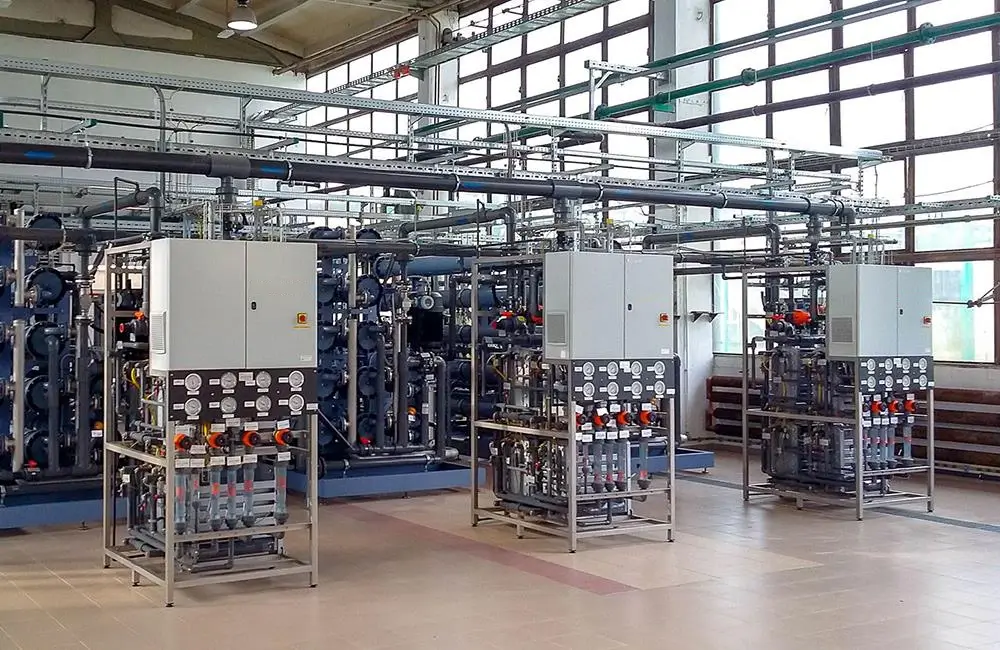
Electrodeionization of ultrapure water
Electrodeionization (EDI) is used after reverse osmosis to further purify demineralized water to obtain low levels of conductivity and silica. EDI uses ion exchange membranes, ion exchange resins and electricity to produce high-quality water without downtime for regeneration. EDI is an alternative to installing a FSD demineralizer.
Typical applications for EDI are boiler feedwater for thermal and power plants, process water in the electronics industry, pharmaceutical industry, hospitals and laboratories.
Typical EDI Applications
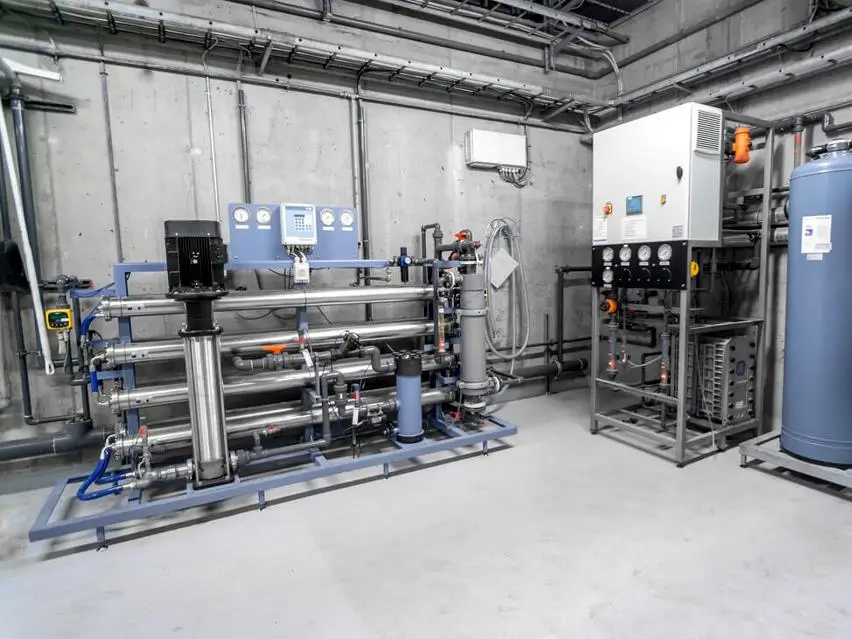
Power Plant Water
Instead of using a conventional FSD demineralizer, a membrane degasser in combination with EDI can produce high-quality demineralized water without the use of any chemicals. This provides non-aggressive boiler feedwater with low conductivity and silica content.
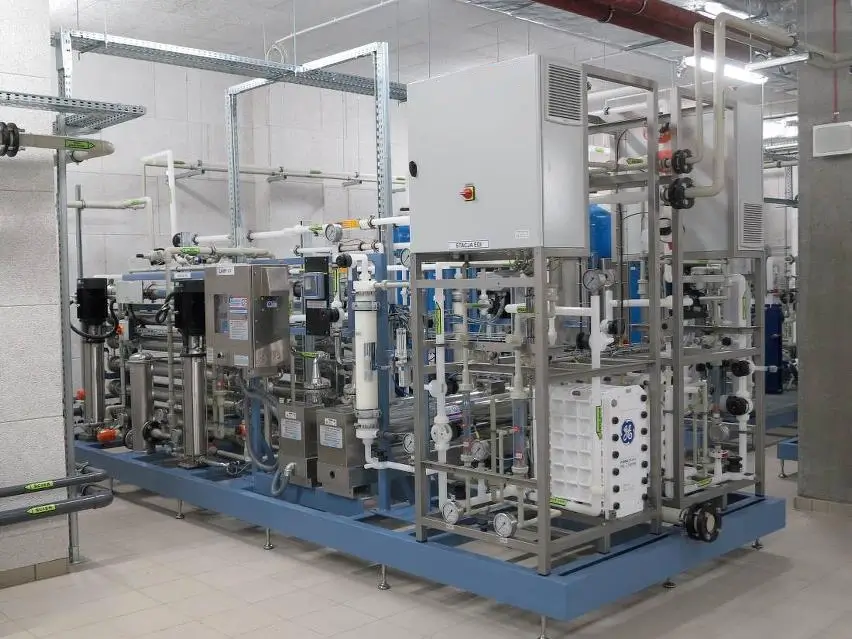
Ultrapure Process Water
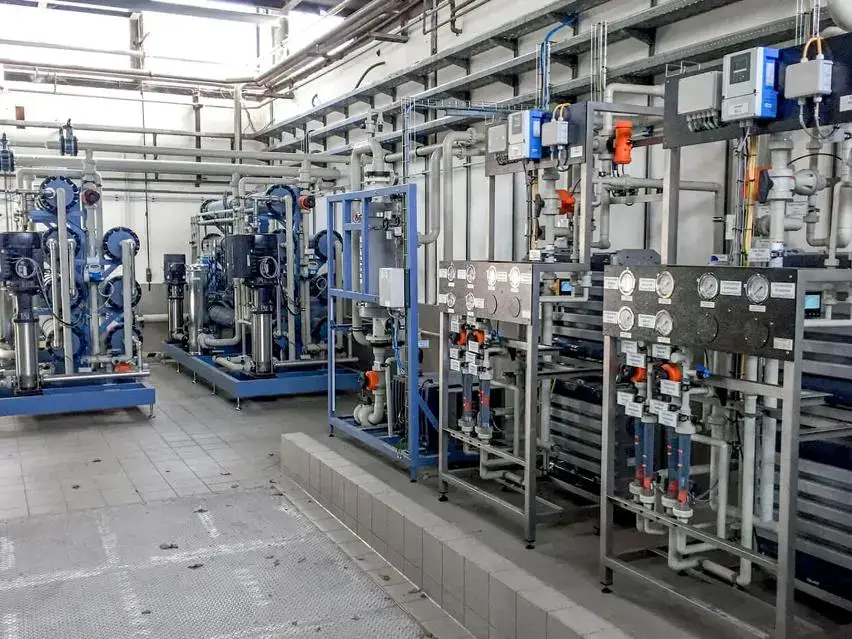
Reverse osmosis EDI provides ultrapure process water with low conductivity. Pictured is an EDI for ultrapure water in a microelectronics manufacturing facility. The EDI is equipped with special pharmaceutical modules for a hygienic design.
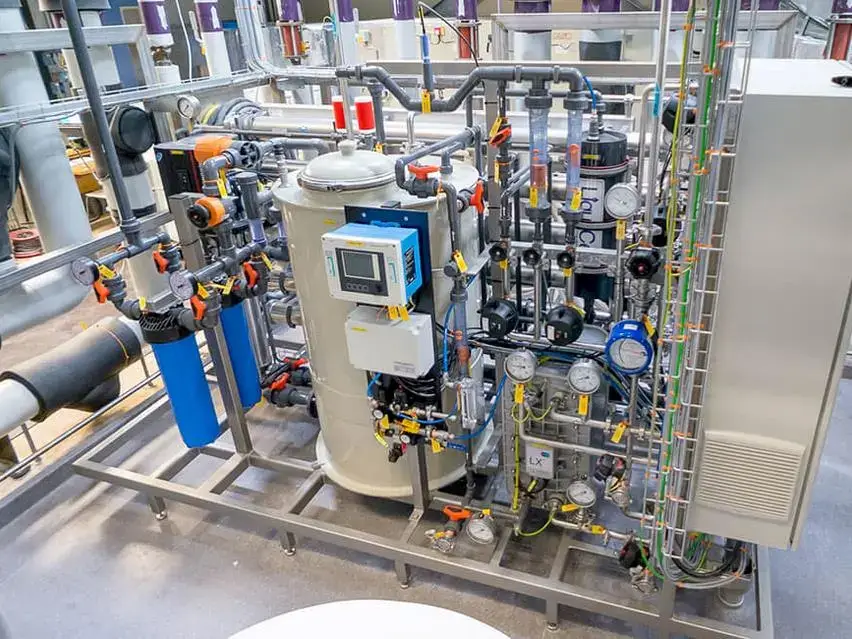
Water for Pharmaceuticals
The production of purified water in the pharmaceutical industry requires a water purification system in a hygienic design. EDI is adapted to comply with the current versions of the European and US Pharmacopoeia (USP, Ph. Eur.).
EDI Benefits
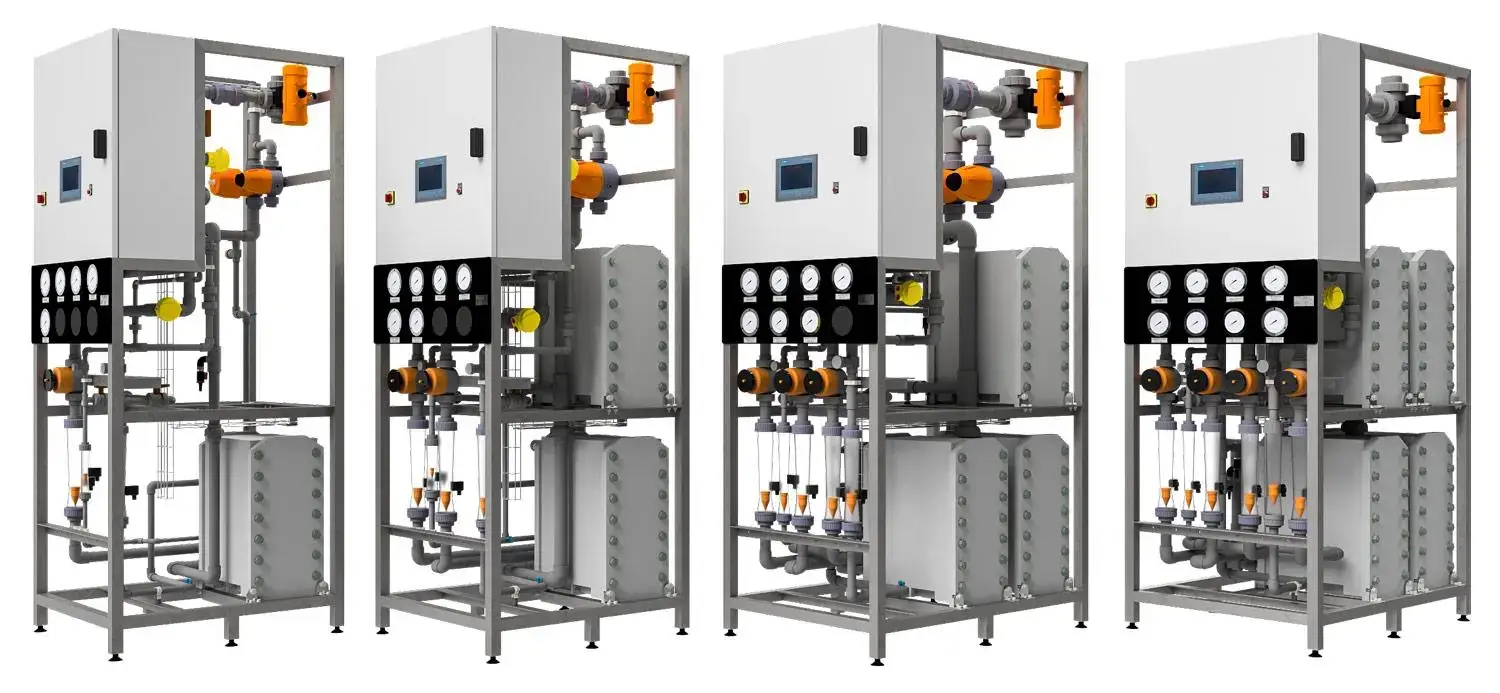
Small, medium, large...
We use the modular design principle in all of our EDI series.
The picture shows one of our EDI series with a flow rate of 1.7 to 18 m³/h.
Main features, high reliability
Our EDI range includes 14 standard modules with a capacity of up to 60 m3/h. Each series is designed with high-quality components to ensure maximum reliability and ease of maintenance.
Based on the standard design, we also offer advanced features for greater automation and safety. Please contact us for more information on advanced features.
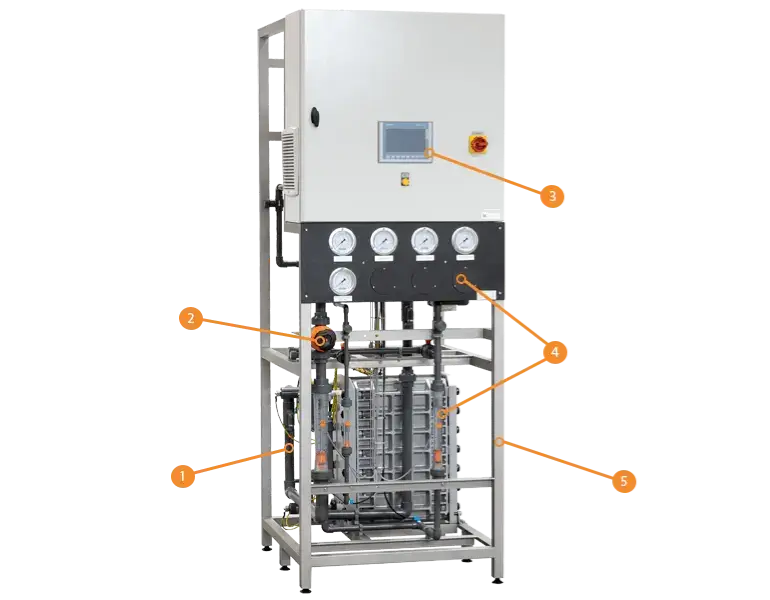
1. Piping system
PVC piping system, including manual three-way release valve for high-quality flushing or circulation.
2. Conductivity Sensor
Signet Conductivity Transmitter. For reliable water quality.
3. PLC Control
Available with or without PLC control.
4. Simple control
Pressure gauges and flow meters provide simple control of operation.
5. Frame
AISI 304 stainless steel frame for a robust construction.
Option
Control your water treatment system
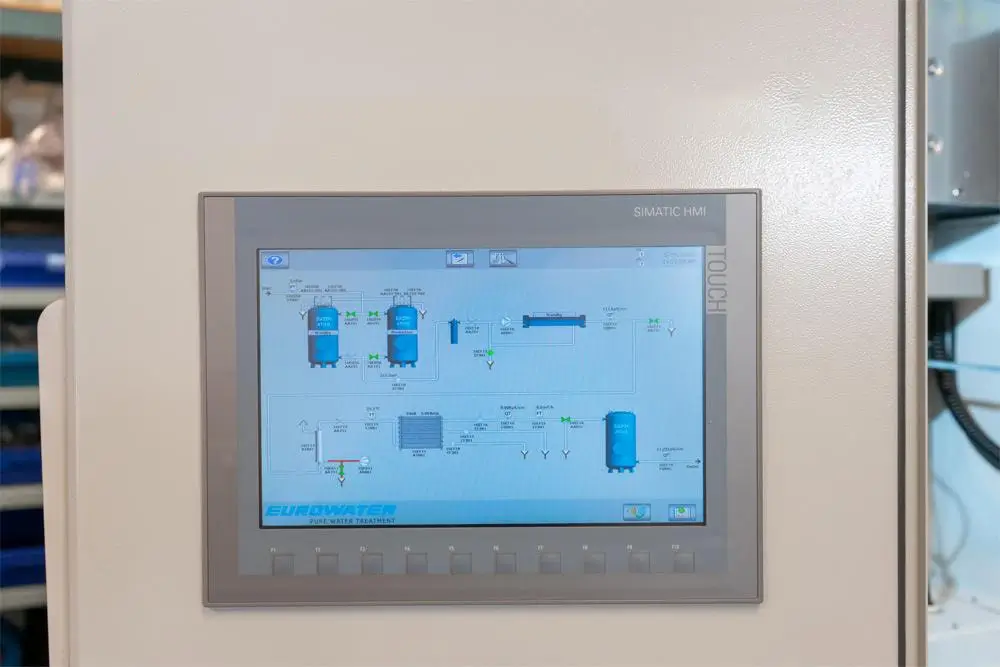
By choosing the EDI unit with PLC, you can control the entire water treatment system, not just the EDI unit.
The PLC is installed in a control cabinet with a touch screen operator interface. Different alarms can be set for high conductivity, low product flow, concentrate flow and electrode flow. The software is developed by EUROWATER automation engineers, giving you tailored software designed for your needs.
More Options
The EDI unit is designed according to the same design principles as our standard units, but is customized to meet your specific needs. Almost all parameters and components can be varied and combined.
See the selection of individual parameters below.
Increased productivity
With individual EDI, productivity of up to 60 m3/h can be achieved.
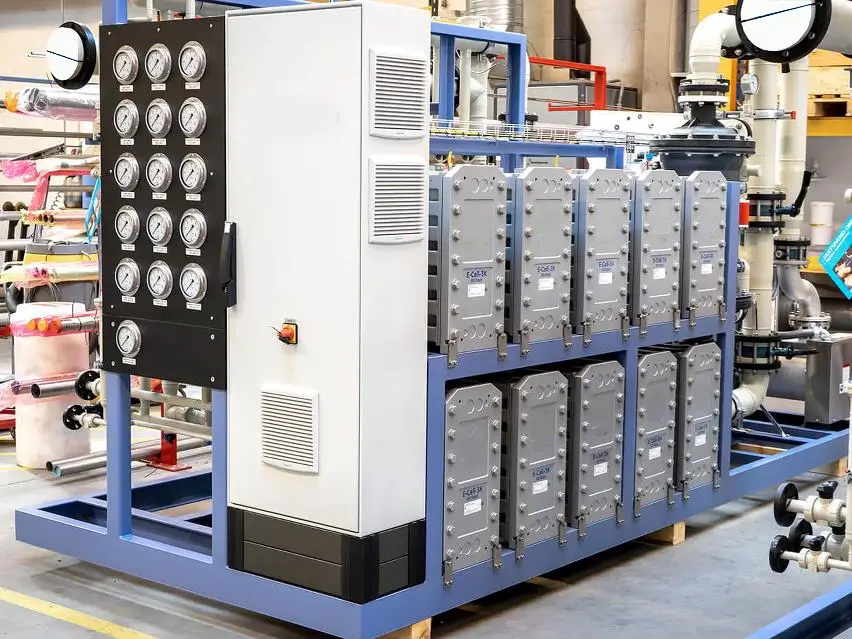
Polypropylene Pipe System
EDI with polypropylene pipe system is resistant to corrosion and temperature. The pipes are IR welded to ensure high impact resistance and thermal resistance.
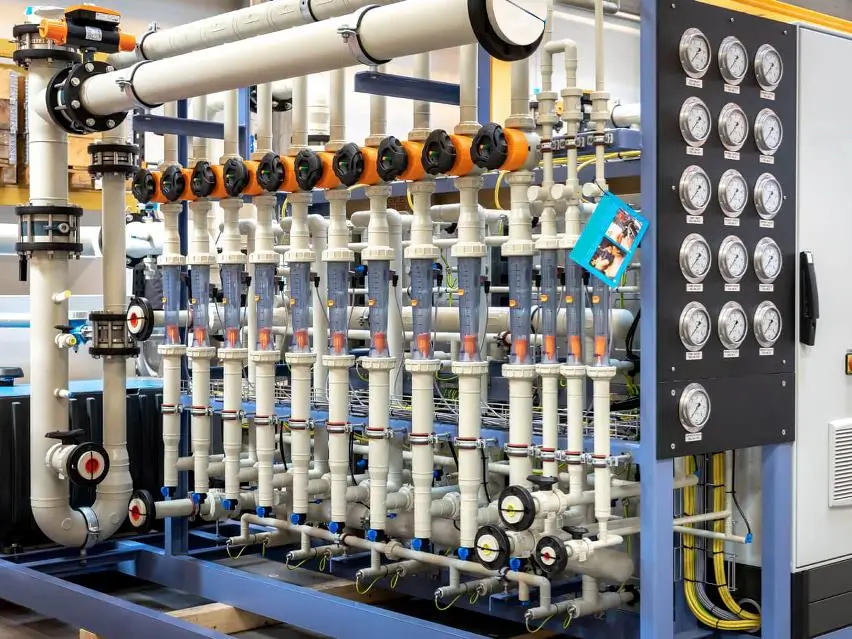
Devices
EDI units can be equipped with special control and measuring equipment
Description of the EDI Process
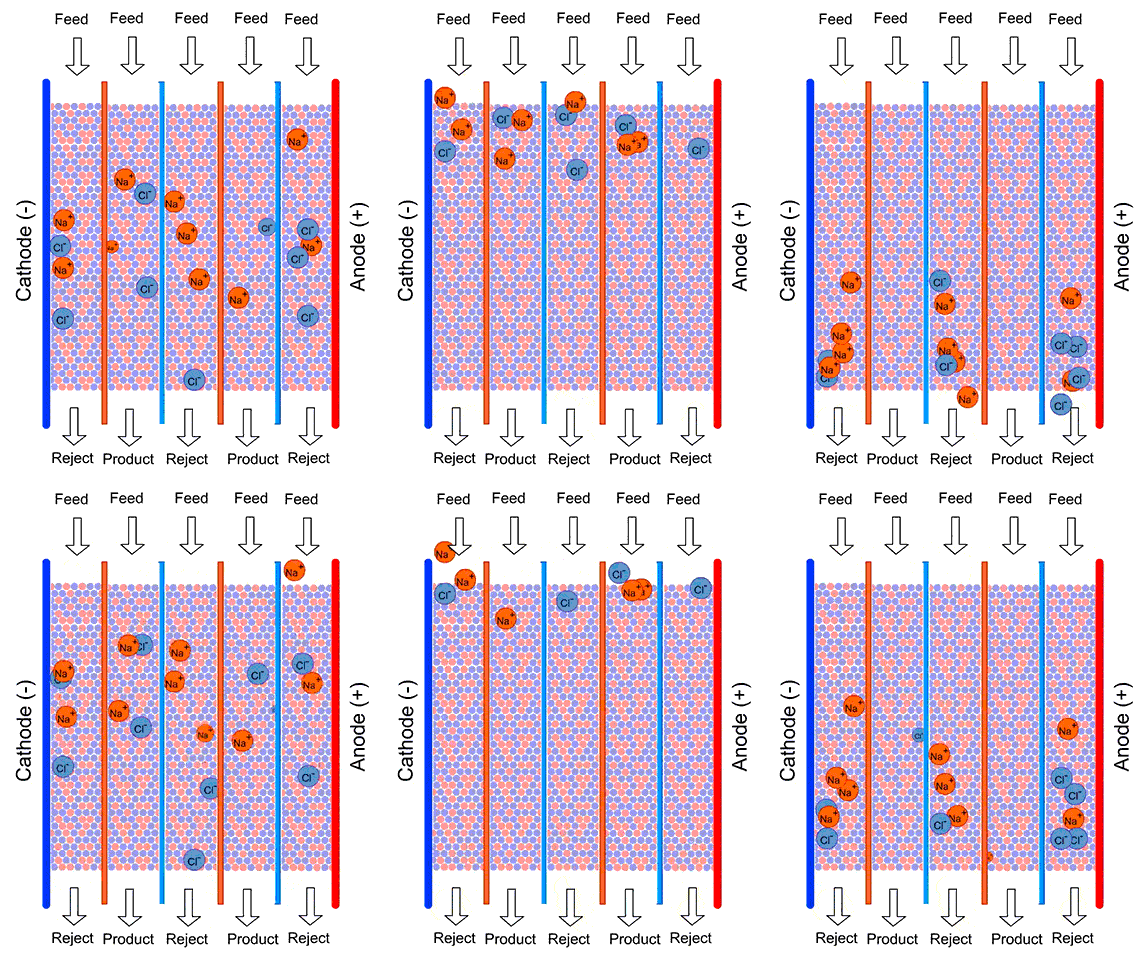
A typical EDI device contains alternating semipermeable anion-exchange and cation-exchange membranes. The spaces between the membranes are configured to create fluid flow compartments with inlets and outlets. A transverse DC electric field with an external power source powers the electrodes at the ends of the membranes and the compartments.
Separated Ions
The compartments bounded by the anion membrane facing the cathode and the cation membrane facing the anode will "catch" the ions that have migrated from the dilution compartments. Since the concentration of ions in these compartments increases compared to the original ones, they are called concentration compartments, and the water flowing through them is called the concentrate stream (or sometimes the waste stream).
Ion Exchange Membranes
Now let's add some ion exchange membranes to direct the ions into different channels, as shown in the animation. The red membranes are cation-selective membranes and the blue membranes are anion-selective membranes.
Negatively charged anions (e.g. Cl-) are attracted to the anode (+) and repelled by the cathode (-). The anions pass through the anion-selective membrane into the adjacent concentrate stream where they are blocked by the cation-selective membrane on the far side of the chamber and are thus captured and carried away by the carrier water in the concentrate stream.
Positively charged cations (e.g. Na+) in the stripping stream are attracted to the cathode (-) and repelled by the anode (+). Cations pass through the cation-selective membrane into the adjacent concentrate stream, where they are blocked by the anion-selective membrane and carried away.
The concentrate stream maintains electroneutrality. The ions carried from both sides neutralize each other's charge. The current drawn from the power supply is proportional to the number of ions moved.
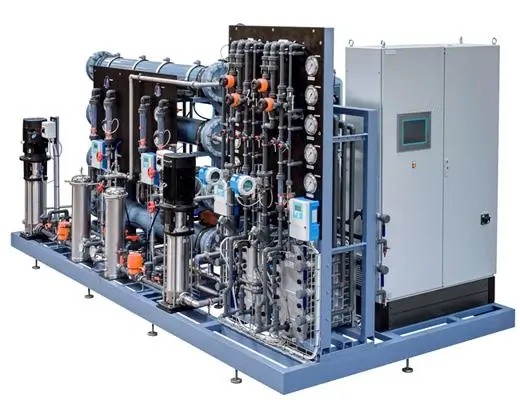
Single Skid Pretreatment
A complete skid mounted water treatment plant with all internal piping and wiring prefabricated. This solution can be customized to suit your EDI pretreatment needs.
Get the optimal solution
The choice of installation depends on the area of application, quality and water consumption. We are at your service to find the optimal solution based on our know-how. Fill out the form and we will contact you.