Wastewater treatment plants
Wastewater treatment facilities are a complex of specialized devices designed to purify wastewater to established standards, taking into account local requirements. After purification, the water is either discharged into a reservoir or sent to the sewer system for additional purification. Purified water is also used for technical needs of enterprises in various industries.
The consumption and use of water in household and industrial activities of the population inevitably leads to its enrichment with various elements. It is fair to note that how much water a person consumes is returned back. It is quite natural that before returning it to nature, it is necessary to carry out high-quality purification to the appropriate standards of maximum permissible concentration (MPC).
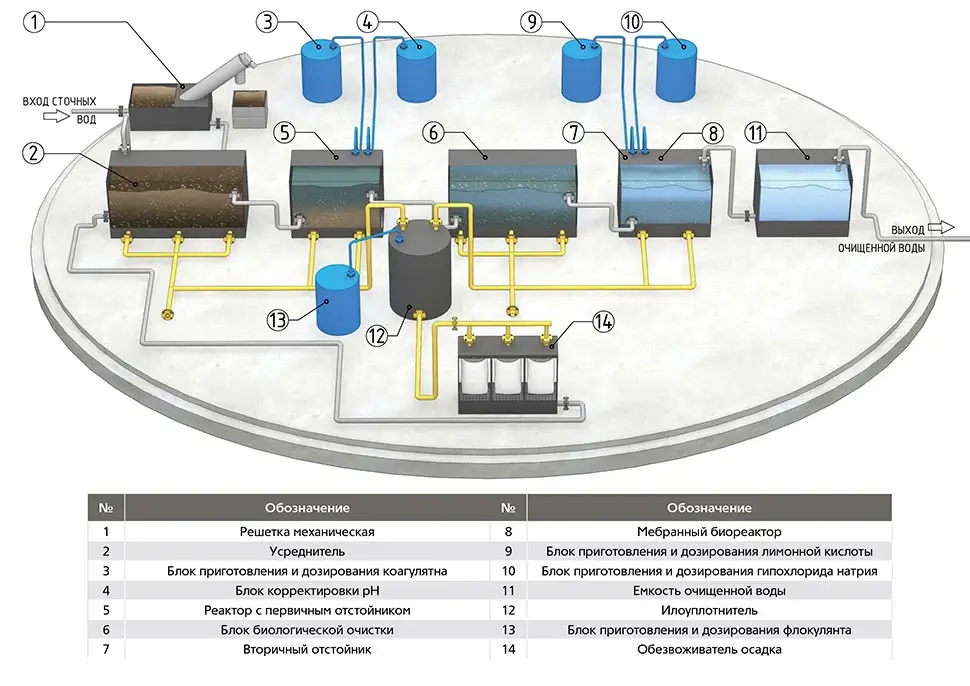
The operation, design and technological scheme of the treatment facility are selected individually and depend on its type, the purpose of the liquid being purified, the composition of the contamination and the tasks set.
Main types of ECOMAX OS
Principle of operation of treatment facilities
When designing and constructing a treatment facility, all stages of cleaning are used, forming a complete complex that ensures compliance with the requirements of established standards. A set of measures is selected individually for each facility. Its type, location area and tasks are taken into account.
Wastewater treatment occurs sequentially in several stages, among which may be the following:
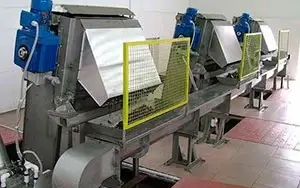
MECHANICAL
At this stage, up to 75% of the wastewater is removed - various impurities, including fat, and objects..
BIOLOGICAL
Removal of contaminants using microorganisms. Such microorganisms process contaminants (organic, nitrogen, phosphorus and others) into something safer for the environment.
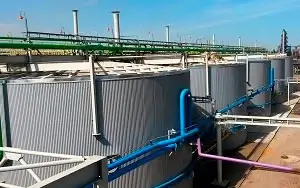
PHYSICO-CHEMICAL
It is used to clean insoluble contaminants (suspensions, heavy metals, cyanides, fluorides, etc.). The cleaning principle is based on the use of chemical reagents and the laws of physics (insoluble fragments are enlarged with the help of coagulants, enlarged solid fractions settle at the bottom of the tanks and are removed by special mechanisms).
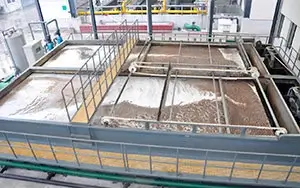
CHEMICAL
Chemical compounds dissolved in wastewater are converted into insoluble ones using special reagents, and then either settle to the bottom or form foam on the surface of the liquid, which is removed mechanically.
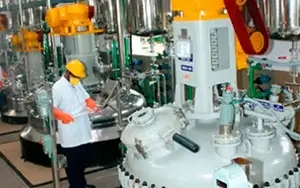
ULTRASONIC
This method is used as one of the methods of wastewater disinfection.
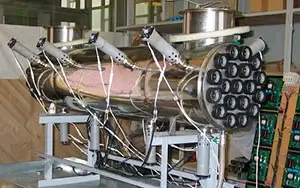
ULTRAVIOLET TREATMENT
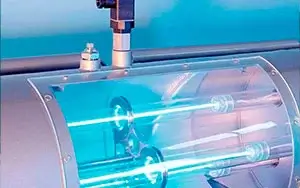
Another method of wastewater disinfection, the most common of all used: the water flow is passed through special installations with UV irradiators, the radiation of which kills most pathogenic flora.
REVERSE OSMOSIS
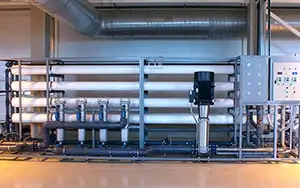
The most effective and one of the most expensive methods of wastewater treatment. It is used to achieve a degree of wastewater treatment that allows wastewater to be reused in the production cycle (i.e., to create a closed water consumption cycle).
PURIFICATION ON ION EXCHANGE FILTERS
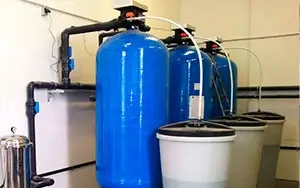
It is used to remove ions from wastewater that cannot be removed by precipitation using simple coagulation or flocculation, such as iron.
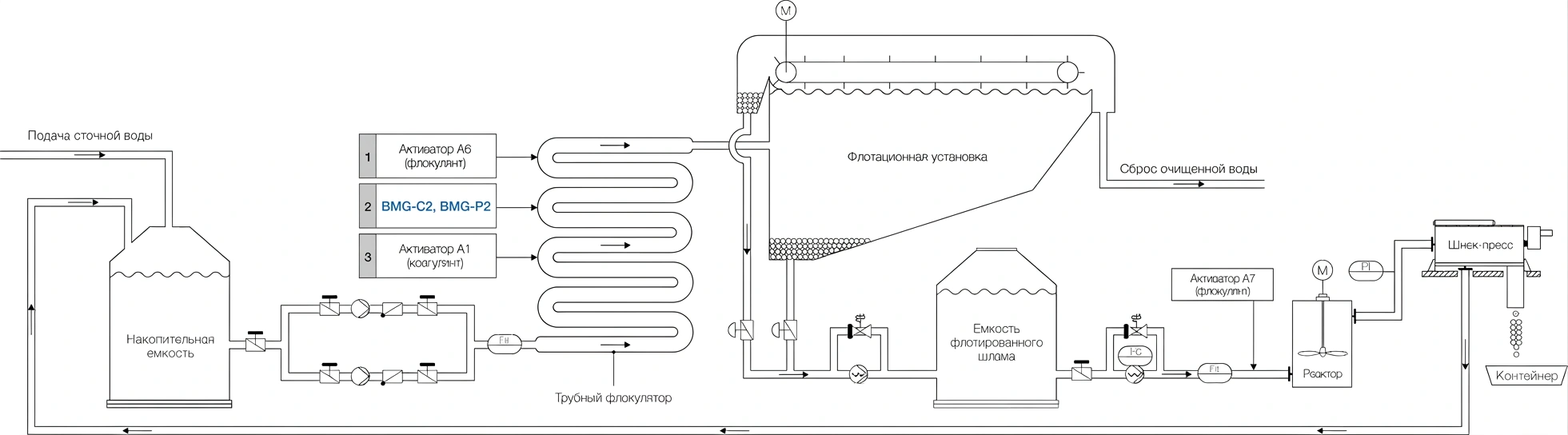
Example of a wastewater treatment scheme with a flotator
Oil-containing wastewater is fed into a tubular flocculant for reagent treatment with flocculant solutions. The water treated with reagents passes through the tubular flocculant for better mixing and distribution of reagents in the wastewater volume. As a result of dosing the reagents, oil products are bound and poorly soluble particles are formed. Then the wastewater is sent to a flotation unit, where, thanks to the physicochemical method of purification, pollutants are removed in the form of flotation foam. The purified wastewater is discharged from the flotator by gravity, and the separated flotation foam is fed to a screw press for dehydration.
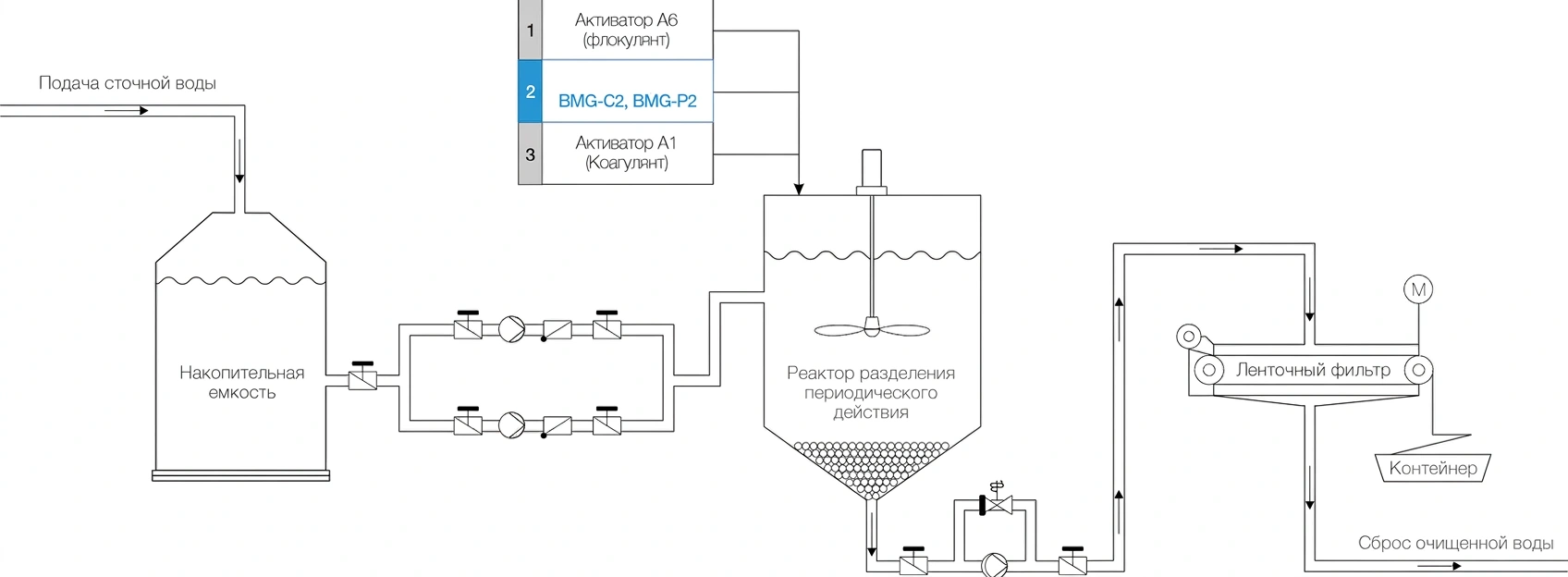
Example of a wastewater treatment scheme with a reactor
The process flow chart for cleaning oil-containing wastewater involves its accumulation and sequential processing in a separation reactor with working flocculant solutions. As a result of dosing and mixing of reagents, oil products are bound and a poorly soluble sediment is formed. After lagging, the resulting sediment is filtered on a belt filter, and the purified water is discharged by gravity.
|
Item No. |
Name of indicators |
Wastewater |
|
|---|---|---|---|
|
Before treatment |
After cleaning |
||
|
1 |
pH |
6.5-8.5 |
6.5-8.5 |
|
2 |
Suspended solids, mg/dm3 |
up to 350.0 |
3.0 |
|
3 |
BODp, mg/dm3 |
up to 500.0 |
3.0 |
|
4 |
COD, mg/dm3 |
up to 600.0 |
15.0 |
|
5 |
Ammonium nitrogen, mg/dm3 |
up to 45.0 |
0.4 |
|
6 |
surfactant, mg/dm3 |
up to 12.0 |
0.1 |
|
7 |
Petroleum products, mg/dm3 |
up to 3.0 |
0.05 |
|
8 |
Phosphates, mg/dm3 |
up to 16.0 |
0.2 |
Get the optimal solution
The choice of installation depends on the area of application, quality and consumption of water. We are at your service to find the optimal solution based on our know-how. Fill out the form and we will contact you.