Pumping stations
Water supply pumping stations are the main components of water supply systems. They transport water to facilities and consumers using pumps with suction pipes and pressure water mains connected to them.
Pumping stations are selected based on their performance, based on the volume of water consumed, the enterprise's water consumption mode, and the dimensions of the regulating tanks. The pressure calculation depends on the required free pressure and the relief of the surrounding area. In addition, when deciding on the types of pumps and their number, it must be taken into account that they operate in conjunction with water mains or a water supply network. Water supply pumping stations are divided into three categories based on their reliability, depending on the operating mode: Category 1 — pumps must operate continuously; Category 2 — temporary shutdown of pumps, necessary for switching on reserve units, is permitted; Category 3 — interruption in water supply operation, permitted for liquidation of breakdown or accident.
By purpose, pumping stations in water supply systems are distinguished as follows:
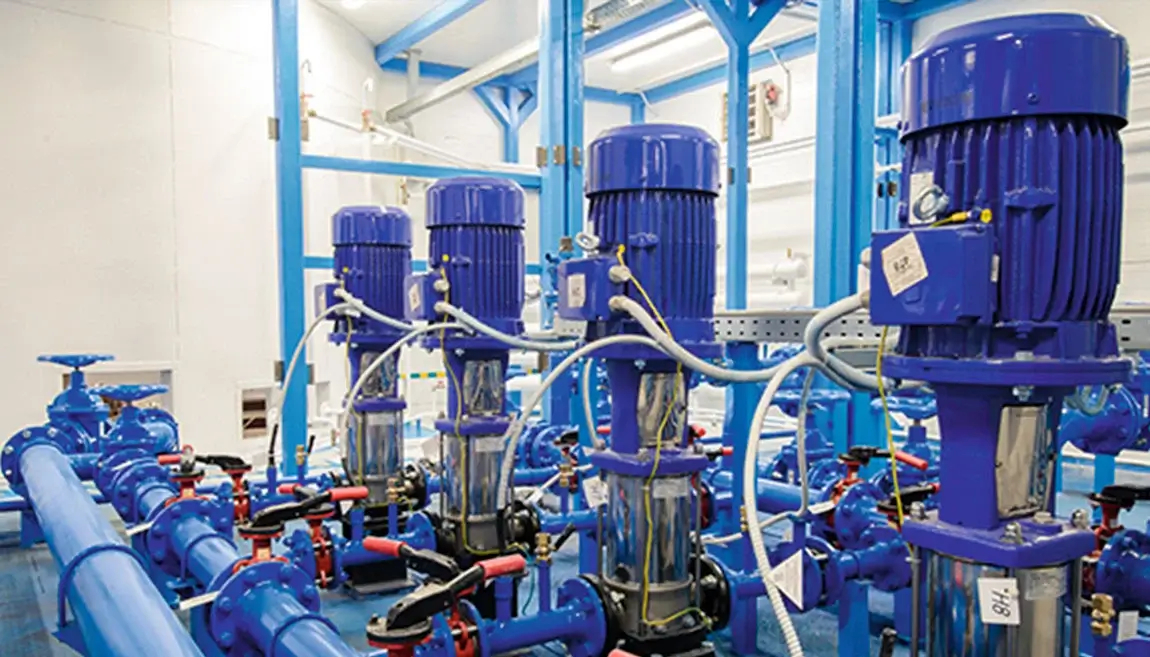
Stations of the first lift:
Stations of the first lift, if it does not require preliminary purification, supply water from the source directly to the water distribution network, water towers and other structures of the water supply system. If purification is necessary, then first it goes to the treatment facilities, and then to the network and further along the water supply system.
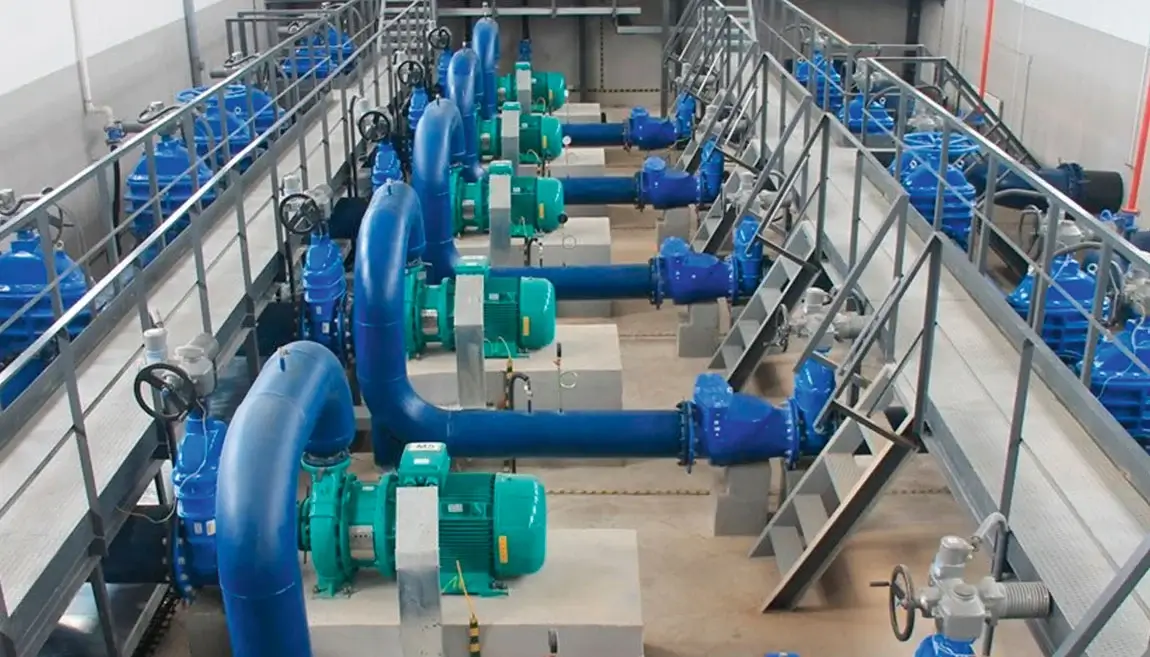
Second-stage pumping stations:
Second-stage pumping stations pump water from clean water storage facilities directly into the water distribution network, towers and other engineering devices. Booster stations are connected to the water supply network to increase the water pressure. Circulation stations are installed in the water supply circuit to pump waste water from industrial use to cooling devices and treatment facilities with a cell for further return to the enterprise.
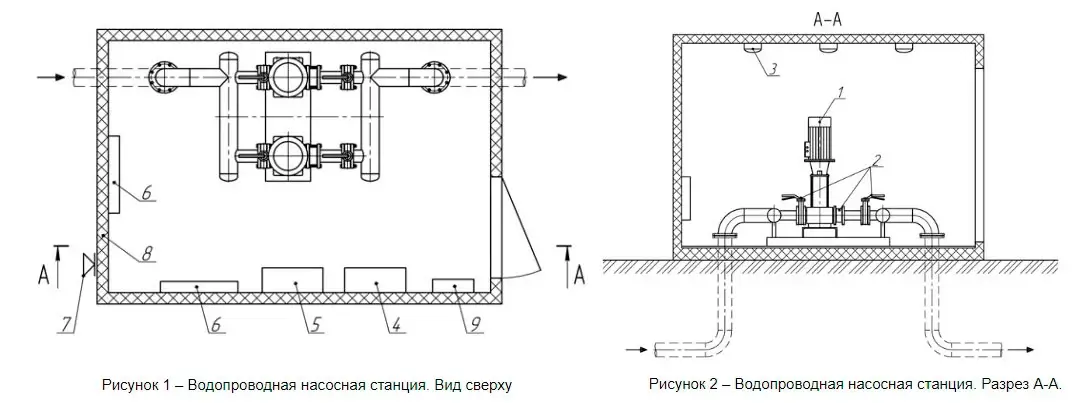
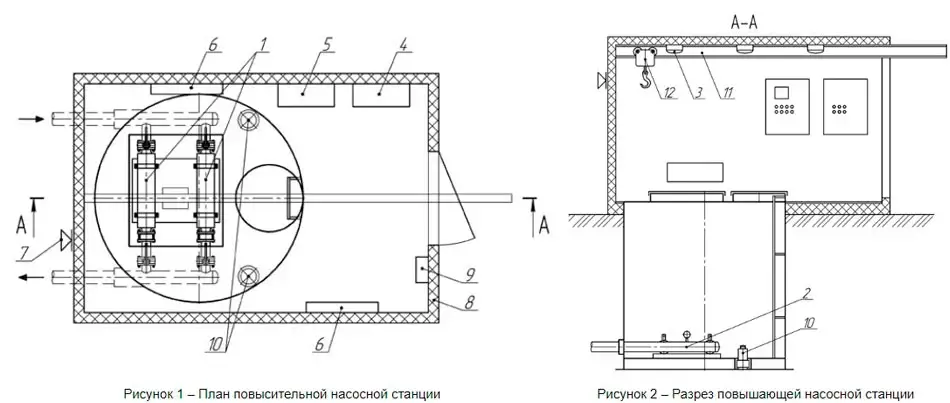
Complete water pumping stations of the 1st and 2nd lifts with a capacity of up to 3000 m5/h and a pressure of up to 200 meters
Technological solutions are adopted taking into account the above-ground version of the water pumping station. The station can be used for both the 1st and 2nd lifts. The operation of the pumps is fully automated depending on the water level in the reservoir, water tower or pressure in the network. According to the degree of water supply security, the station can belong to the 1st, 2nd or 3rd reliability category.
Block-modular booster pumping stations with a capacity of up to 4000 m5/h and a pressure of up to 500 meters.
The block-modular pumping station consists of an underground and above-ground part. Both parts of the station are delivered to the construction site fully prepared for installation. The purpose of the modular pumping station is the first and second water lift. The pumps operate fully automatically depending on the water level in the reservoir, water tower or pressure in the network. The modular pumping station is equipped with 2 to 6 submersible pumps with cooling jackets. The station can operate even in case of emergency flooding of the machine room, since the pumps are capable of operating under water.
Get the optimal solution
The choice of installation depends on the area of application, quality and consumption of water. We are at your service to find the optimal solution based on our know-how. Fill out the form and we will contact you.